
They don't want you to know...
Illusions
Life Inside the Bubbles
A drink is poured. The conversation flows more easily. Your worries seem quieter, the people around you seem closer, and the evening takes on a softer glow. It feels as though life has improved. But what has changed- and what will still be there when the feeling fades?
Imagine that each drinking experience creates a Matrix bubble: a temporary space where alcohol changes how you experience yourself, other people, and the world around you. Inside that bubble, confidence may feel easier, connection more immediate, and discomfort less important. The feeling is real. But feeling better about reality is not necessarily the same as making reality better. The deeper illusion begins when we carry a belief back into everyday life: I need alcohol to relax. To connect. To celebrate. To feel like myself. Over time, we may stop seeing the bubble as something we enter and start seeing it as something we need.
The illusion is powerful because it develops within reality (the place where we are supposed to recognize what’s true).
Most people believe the illusions take place in the bubbles and in some ways, they do. We can all easily address the illusions in the bubbles, although some of them may happen unnoticed. For instance: alcohol dehydrates us, so we get thirsty and have another drink. But the real illusion doesn’t take place in the bubbles; it is formed by the experiences we pursue in The Matrix, that reinforces our beliefs about how alcohol “improves our lives.” This is why isolating the Alcohol Matrix matters. It’s not just a temporary change in perception, but a growing belief we develop through it, building more value into reality (where alcohol is not even around). We tend to forget that life, in reality, operates according to different rules- not the rules of the Matrix. The more we keep combining these two worlds, the stronger the illusion may become. To question that belief, we must look beyond what alcohol seems to offer in the moment- and ask what it adds to, or takes away from, the life we return to. Here is an explanation how the belief growing process contributes to dependency or even addiction.
Illusion 1: The Alcohol Matrix helps us connect
People want to connect with themselves and others because we have evolved as social creatures. So what happens when we connect inside Matrix bubbles, where a rise in dopamine makes everyone feel more comfortable while alcohol numbs our fears? When you look through the lens of a Matrix bubble, you become more open to connection. You also project your own Matrix bubble onto the outside world, inviting other people to join you. This is exactly what happens when someone offers you a drink: they are inviting you to join your Matrix bubbles together, creating one large comfort zone.

Imagine a festival or concert where everyone is dancing inside the Matrix. You would see imaginary bubbles surrounding the people there, like those in the picture above. These bubbles grow stronger and larger over time, inflated by more alcohol. Eventually, they merge to create giant Matrix bubbles.You can almost feel this giant bubble at the end of a party, when everyone seems closely connected. Everyone appears fully engaged with one another, tuned into the same Matrix frequency- with small variations, of course, because some people drink more than others.
What if you joined this party while sober? You might feel like an outsider- a lonely child in a corner, excluded from the Matrix bubble. You might struggle to connect with anyone. On top of that, communication between the Matrix – and your reality – could become confusing. This is one of the difficulties that arise when these two worlds meet. From your perspective, you might find yourself surrounded by people who live in another world, moving in slow motion and looking increasingly strange and tired as the party goes on. It can feel as though you have only two choices: either you hold your ground and soon grow bored with the conversations, or you connect with them according to the rules of the Matrix to stay on the same wavelength. Once again, this party is not an invitation to connect with and support one another in reality. The Matrix is promoted as something that serves everyone within it, but it offers no meaning, purpose, or reason within the ruleset of reality. All it does is cheating, pretending like our natural fears in reality has malfunction, fading our responsibilities, etc. It simply distorts our perception of reality to improve pleasure and relief discomforts, making us feel better in an illusory present moment.
When children find themselves at Matrix events, they can feel disconnected. This may even be one of the reasons to start drinking as they grow older: to catch up with the others by joining them inside the Matrix. Now imagine a wedding reception where people have had a few drinks and are about to hit the dance floor. You can see the initial feeling of children who like to join and catch up, until they start to feel a bit awkward: their enjoyment fades away as they find themselves surrounded by emotional clowns. Instead of feeling included, they may now feel increasingly insecure. They cannot let go in the same way as the adults, who are using the “secret key” of numbing their fears while raising dopamine levels.
When children start to feel disconnected, another problem arises: their attention might turn into their mobile phones, trying to “connect online”. The adults then question whether the children are addicted to their phones because they are using them at a wedding. Do you see the irony? Who is to blame: the child looking for an escape – by the lack of opportunity to connect with a bunch of idiots? Or the adults – who are not even interested to connect with children (as they rely on an alternate state of reality to connect in the Matrix, by another frequency of which children can not even tune into). Maybe it reflects the selfish mentality of adults to exclude children from the Matrix party, children will just have to adapt. In this setting, the adults’ reliance on alcohol can seem even stronger than the children’s reliance on their phones. Some adults appear unable to imagine a wedding reception without alcohol. But how would a wedding reception look like for children without mobile phones? They would probably act a bit insecure at first (as a logical way to analyse the environment before opening up), but eventually they will blend in with each other in healthy ways: they don’t need alcohol to connect and have a good time, the adults do. The same logic applies in a restaurant. The adults may express themselves for hours with their lovely glasses of wine in their hands, while wondering why their children are not enjoying themselves. Yet there is again hypocrisy here: the children are excluded from the Matrix frequency; would those adults express themselves with so much excitement for hours without alcohol? Probably not, but they expect their children to enjoy the same experience that they themselves seem to need the Matrix to sustain. It’s all contradictive to see how children are left behind, disconnected from the adults.
Then comes the return to reality. After drinking, parents may sleep poorly and wake up with less mental clarity. When that pattern repeats over years or decades, the effects can extend beyond a difficult morning, potentially affecting their health, mood, and patience as parents. This is again sad, because children are watching, they scan for safety and they also remember.
If you want to build and strengthen connections in reality, the Matrix is just not the best place to be in. The feeling of connection is only temporary and not the same as building a connection in reality. Second, you have to deal with the artifacts the next day and delayed consequences long term, which can distract you further from recognizing and responding to the needs within yourself. You may embrace the predictable fatigue as part of the game the next day, but over years and decades, those effects may become more serious, taking up more of your time and energy and affecting your mental well-being, while also affecting your surrounding such as your kids. These consequences may interfere in your relationships- the very connections you were trying to strengthen. All regular or severe drinkers tend to focus on the ‘bonding benefits in the bubble’, but the reality often provides more ‘relational noise’ as a serious consequence. The cost may appear invisible at first (being the thing that we should see and value), but eventually will come up to the surface.
People need strong connections built in reality. Those connections can endure across great distances and long periods of time. Think of a close friend or a parent who lives overseas: the relationship does not depend on sharing the same bubble, but on the meaning, care, and trust you build together. Ok yes, people may begin a relationship under the seemingly ideal conditions created by The Matrix, but those relationships only become valuable when we give them real meaning. On the other hand, if alcohol becomes an integral part of the relationship, greater risks arise to damage the very connection it seemed to help create. A relationship can start in the Matrix, grow in reality and even lead to marriage- only to be undermined over time by the consequences within the rulesets of reality. Then suddenly, the Matrix is seen as a totally different world; a world that now seem to work against them.

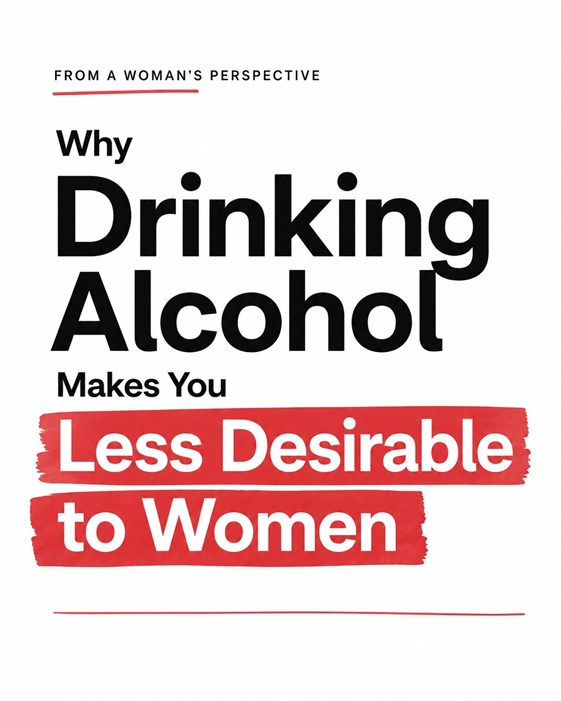
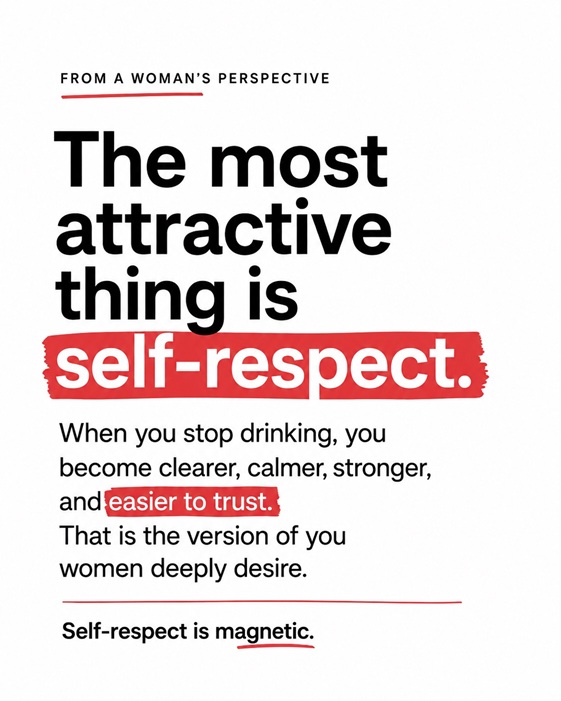
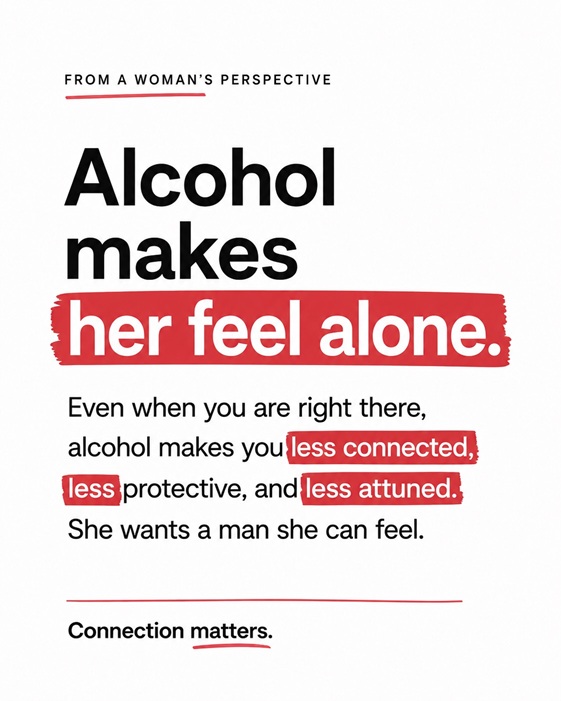
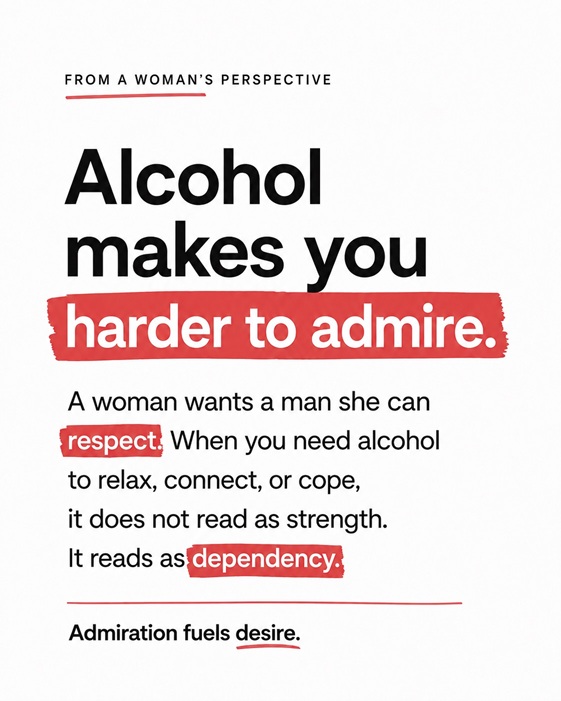
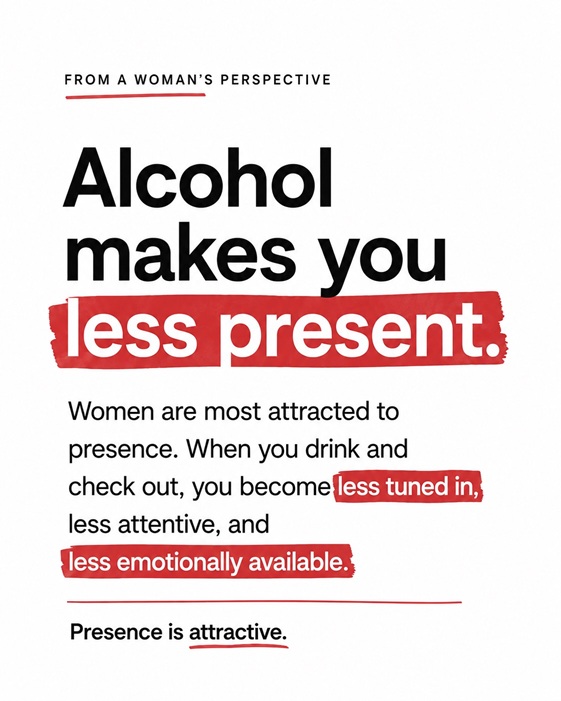
Illusion 2. I control the Alcohol Matrix.
Sure, everybody “does.” Many people only step into the Matrix to relax, socialize, take the edge off, enjoy the sunset, celebrate, cope with stress, or enjoy a concert. Before they know it, they are drinking twice a week- or more. What began as an occasional choice becomes a recurring habit: a cycle of drinking and recovering, while believing to be in control.
The illusion begins to unravel when people consider cutting back because their lives have become less fulfilling. Their careers may have stalled, they may feel disconnected from the people around them, or they may be facing health, financial or relationship problems. Yet one thing remains at the centre, seemingly consistent: alcohol, which appears to hold their reality together.
It may feel like the one thing they still cannot complain about- the magic substance that provides calmness, control, confidence, excitement, or energy. They believe this “medicine” will help them keep going.
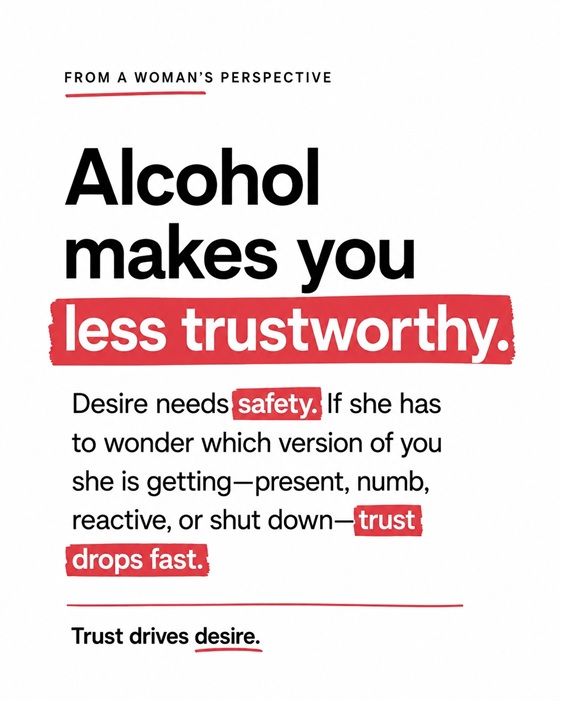
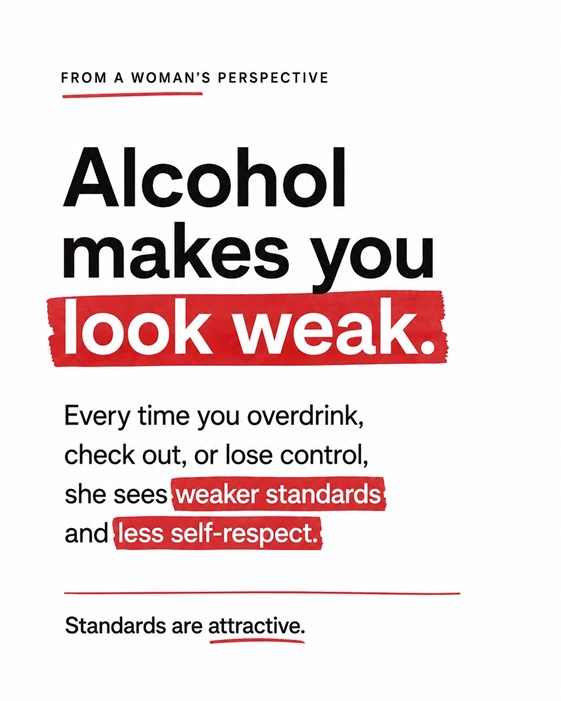
Denial of dependence is one of the greatest illusions (within reality), because it disguises the perceived need for a drug as a choice. People may reassure themselves that they are “controlling the Matrix,” when they are caught in a habit loop of using alcohol to manage their fears, partly created by the drug itself as they also develop some love-hate affair with it.
For some, quitting feels terrifying. Leaving this seemingly magical substance behind does not feel like a reasonable option. Instead, they prefer what seems like a less drastic alternative: cutting back or moderating. The thought of quitting altogether brings too many fears to the surface at once:
“I want to change my drinking habits, but I’m terrified that life will feel flat without alcohol.”
“The thought of never drinking again makes me panic inside.”
“I know alcohol no longer serves me, but it feels like a toxic relationship I’m afraid to leave.”
“The idea of facing life’s ups and downs without my alcohol buffer scares the bleep out of me.”
“I feel like I’m living a double life- successful on the outside, struggling on the inside.”
Denial can become an easy way to avoid confronting these fears. It is easier to keep the Matrix alive and compare yourself with people who drink more heavily- the ones you see as having “real alcohol problems.”
But you do not have to be the heaviest drinker in the room to struggle with changing your relationship with alcohol. For some people who drink regularly, trying to quit brings them face to face with the fears they have been trying to avoid. Their first response may be to defend the habit:
“I’m not an alcoholic”
“Am I not allowed to celebrate anything?”
“I will prove I can handle Dry January, then go back to drinking in February.”
The struggle to quit can reveal a contradiction within the illusion: if alcohol is not adding lasting value to your life, why does leaving it behind feel like such a loss? That difficulty is not a personal failure, but it can be a reason to question how much control you really have.
When people struggle to leave alcohol behind, they may also wonder why others seem to “get away with it.” Those other drinkers appear to enjoy the supposed benefits while remaining fully in control. But appearances do not reveal someone’s whole relationship with alcohol.
Using those appearances as reassurance can become a form of confirmation bias: “They seem fine, so alcohol cannot be that harmful.” Once again, attention shifts towards comparing people rather than examining the substance itself- and the role it plays in our own lifes. Video credit: Craig Beck.
Illusion 3: The Alcohol Matrix Can Be Moderated
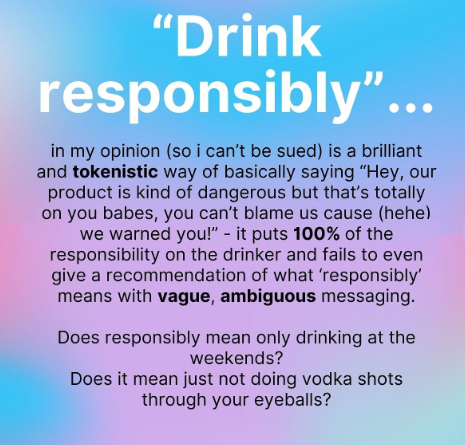
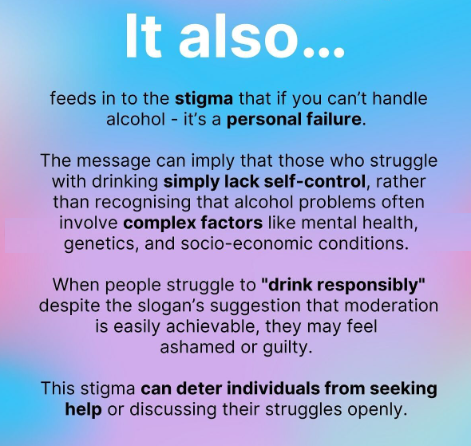
The promise of moderation is captured in the alcohol industry’s slogan: “Enjoy in moderation.” Read those words again carefully. This is marketing: an invitation to keep using an addictive substance to do so “with care.” If alcohol is presented as something beneficial, why does enjoying it require a warning to limit it?
The slogan contains tension. Would we market water in the same way? Would “enjoy in moderation” sound reassuring if it referred to heroin?
The Dutch slogan “Geniet met mate,” associated with STIVA, carries the same message. The industry encourages people to limit their consumption while continuing to sell the product. Of course they care (of themselves being suit) – but what, exactly, are they asking us to care about?
Moderation is usually presented as a way to limit alcohol intake, reduce harm, and remain in control. Drinking less can reduce some risks, but that does not mean it eliminates them or resolves an underlying dependence. Within the Matrix, moderation may also become a way to preserve the habit rather than question it.
Repeated drinking can reinforce the association between alcohol and relief, pleasure, or connection. For some people, that reinforcement leads to wanting more, not less. From this perspective, the slogan could be rewritten as: “Enjoy repeating an addictive substance- with care.” Does that sound as reassuring?
The issue is not simply how much we drink. It is also what we keep teaching ourselves to expect from the drink. If every celebration, stressful evening, or social gathering becomes another reason to enter the Matrix, the belief that alcohol improves our lives can become stronger.
This is why the discussion should not focus only on personal responsibility. Alcohol’s addictive properties matter too. People differ in their vulnerability to dependence, and not everyone who drinks develops it. Nevertheless, repeated use can reinforce a habit, and tolerance can develop over time. Tolerance is not proof that the body is protected from harm.
Marketing and social pressure can further strengthen the pattern. When drinking becomes the expected way to relax, celebrate, or connect, people may promote alcohol without questioning the role it plays in their own lives. The culture helps keep the Matrix alive.
From this perspective, a troubling question emerges: does successful moderation always represent freedom, or can it sometimes mean maintaining a long-term attachment to the Matrix? The industry can continue to profit even when people reduce their consumption temporary (as most people go back to their initial drinking amounts anyway), they will always remain customers.
For someone trying to change the habits of drinking, “just have a little” can be deeply unhelpful advice. Imagine telling someone recovering from heroin dependence: “You’re having a hard time- just have one shot, but keep it moderate.” Alcohol and heroin are not identical, but the example exposes the problem with treating moderation as a universal solution to dependence.
Many people feel in control of their drinking for years or decades. Some may never experience the consequences they fear; others may encounter problems much sooner. What happens when someone no longer feels comfortable in their own skin, recognizes the harm, and still struggles to cut back?
Who is the slogan for? Those who already feel in control may see little reason to change. Those who are struggling may already have tried to follow its advice. If “drink with care” were enough for everyone, why would so many attempts at moderation fail?
For some people, the way forward is not to renegotiate the relationship, but to leave it- a divorce from the Matrix. But this wouldn’t maintain the recurring customers does it?
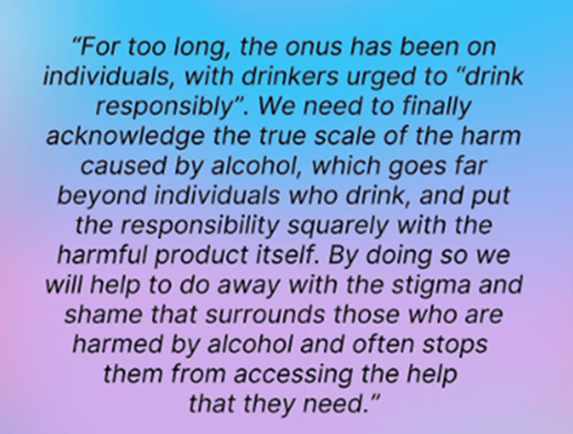
Yet the conversation often returns to the individual who supposedly lacks “responsibility.” The alcohol industry, friends, and loved ones may all ask why that person cannot simply control their drinking. This risks overlooking the addictive substance at the centre of the problem.
Within the Matrix metaphor, drinking in moderation means continuing to enter temporary bubbles and interpreting the experiences inside them as benefits to reality. But a temporary feeling of relief is not necessarily the same as a lasting improvement in life. The next day, reality may include a hangover, poor sleep, or reduced energy.
The deeper question is not just whether you can moderate, but whether the habit is taking you where you want to go.
Imagine a pilot who enters the wrong coordinates and heads towards the North Pole instead of Italy. Halfway through the flight, the pilot slows down and reassures the passengers: “Everything is under control.” But reducing speed does not correct the destination. The plane is still travelling in the wrong direction.
The same metaphor applies when alcohol is taking your life away from your values, relationships, or goals. Drinking less may reduce harm, but it does not necessarily change that direction. Sometimes the question is not “How carefully can I continue?” but “Why am I continuing at all?”
There is no need to envy someone else’s apparent ability to moderate. Their experience does not determine what is right for you. If alcohol is keeping you attached to an illusion, the measure of freedom is not how convincingly you can control the bubble- it is whether you still need to live inside it.
The alcohol minimalist (video credit: Graig Beck)
Illusion 4. The Matrix gives me courage/confidence (video credit : Andy Ramage)
Illusion 5: The Matrix helps to my loneliness. Video credits: Craig Beck
Illusion 6: The Matrix helps me to relax. Video credits: Dr. Andrew Huberman
Illusion 7: Alcohol helps me to sleep ( video credits: William Porter – author of alcohol explained).
This video deserves special recognition because William Porter explains so clearly how alcohol disrupts our sleep cycles and reduces sleep quality. The implications are striking: when sleep suffers, so does our ability to rest, recover, and reset- affecting everything else we want to do in life.
This shifts the focus from having a great time inside the bubbles to a more troubling possibility: we may be paying a long-term price by living below our full potential.
When people leave alcohol behind, improved sleep will be one of the most noticeable benefits. By allowing the body and mind to return to more natural sleep patterns, they will regain energy, mental clarity, and a greater sense of well-being. When poor sleep develops gradually, it can be difficult to recognize how much it has been affecting everyday life. This is why MeRise highlights the connection between alcohol and sleep: you might consider a quality sleep cycle as your main goal, rather than relying on willpower to resist alcohol’s temporary “benefits.” Instead of focusing on what you are giving up, focus on what you could regain: a rested body, a clearer mind, and more energy to live in reality.
The biggest illusion of all is the way people reinforce their own limiting beliefs about how alcohol “improves reality,” while the bubbles actually offer a distorted version of reality- with aftereffects and delayed consequences.
The Alcohol Matrix does not play its tricks only inside those bubbles. The illusion develops in everyday reality over time. Eventually, the bubbles can become increasingly attractive as people learn to use them to cope with discomfort- including the discomfort caused by the bubbles themselves.
Final Message
The power of the alcohol illusion lies not only in its immediate effects, but also in the time it has to become woven into everyday life. Its familiarity, social acceptance, and seemingly manageable consequences can make the illusion difficult to recognize.
When harm develops gradually, it can be easier to overlook or explain away. Our drinking culture reinforces this sense of reassurance: if alcohol is so normal, how harmful could it really be?
Yet familiarity is not the same as safety. Beyond the damage alcohol can cause to health, relationships, and lives, there is another cost that is harder to capture in statistics: lost potential- the time, energy, clarity, and care we could have devoted to ourselves, to others, serving humanity in better ways.