Welcome to the wealth party!
Culture
We share five culture stories to reveal how easily the people and cultures around us can shape our beliefs. The purpose is to recognize these influences in our own lives—not just in others. We are all susceptible to social influence, even when we believe we are thinking independently.
Culture Story 1: What Are We Really Celebrating?
A fictional MeRise story about status, celebration, and the beliefs we inherit.
Imagine an exclusive event that begins aboard a yacht sailing towards a beautiful tropical island. The guests include successful entrepreneurs, famous performers, and influential public figures. These are people whose choices attract attention—and whose lifestyles others may want to imitate.
The setting is impressive. So are their reputations. But reputation, wealth, and wisdom are not necessarily the same thing.
As part of the event, a lottery gives one person outside these circles the opportunity to join them. The winner is Merise—a fictional character representing MeRise and its questions about the “Alcohol Religion.”
She can hardly believe her luck.
On the island, the guests gather for an evening of speeches. Each speaker is invited to share a lesson from their journey: an insight that might help someone else build a meaningful, successful life.
Merise listens closely. There are stories about courage, discipline, creativity, and perseverance. She admires what people have achieved, but one question keeps returning: what have they learned from the things that did not serve them?
Then it is her turn.
The Toast
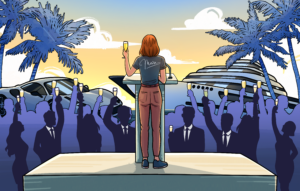
Merise walks onto the stage, nervous and conscious that her outfit is less glamorous than those around her. On the lectern, she places a small box she has brought as a prop.
She looks across the scene and picks up a glass of champagne.
“Thank you for inviting me. I have heard some remarkable stories tonight, and I am grateful for the opportunity to learn from you”.
“Before I share my lesson, shall we celebrate yours? Please raise your glasses—to success!”
Glasses rise across the beautiful beach.
Merise pauses.
“Now, may I ask what this glass has to do with that success?”
A few people smile, waiting for the punchline.
“We have heard about building companies, developing ideas, and creating opportunities. But the moment we celebrate those achievements, alcohol takes its place beside them—as though it belongs in the picture”.
“Why”?
“Did this champagne create the discipline we have been discussing? Did it build our skills, strengthen our judgment, or give our work its meaning? Or have we learned to associate the drink with the achievement?”
She lowers her glass.
“An expensive bottle can look like a reward. That does not make its contents harmless. Alcohol contains ethanol—a psychoactive, toxic substance that can cause dependence. The World Health Organization estimated that alcohol consumption is responsible for approximately 2.6 million deaths worldwide each year. Those statistics do not include job loss, family conflict, relationship breakdowns, mood disorders, or other related issues”.
The room grows quieter.
“I am not suggesting that one toast tells me everything about anyone’s health or life. I am asking why the glamorous part of the story is so visible, while the costs are so easy to leave outside the frame”.
“We discuss investment returns. What about the return on the time, energy, sleep, attention, and money we give to drinking”?
“Drinking champagne may feel rewarding. But I am sure you all understand how the alcohol marketing is explicitly designed to link drinking to joy, celebration, social connection, and milestone moment”.
“The question is what follows when a drinking culture adapts the message—and whether we are willing to include that in our assessment”.
“Alcohol companies benefit when we keep buying. But what do we want to gain? And have we examined whether the ritual helps us get there?”
Merise looks towards the business owners in the room.
“One final question. If you wanted your team to feel connected, valued, and able to thrive, would you make drinking part of the expectation? Or would you create a culture where nobody needs a drink to belong?”
“Perhaps the most valuable thing we can celebrate is the freedom to question what we have been taught to celebrate with.”
She returns the untouched glass to the table and steps away from the microphone.
How Does the Message Land?
Imagine the reactions.
Some guests feel that she has interrupted an enjoyable evening with a lecture they did not ask for. Others object to the way she delivered it. A few wonder whether MeRise is simply another movement convinced that it has all the answers.
Some begin reflecting on their own routines: how often do I drink because I want to—and how often because the occasion seems to expect it?
Disagreement does not tell us what someone knows or cares about. But a familiar ritual has become visible enough to question.
Then one man stands and applauds.
Not because Merise has proved that everyone else is wrong. Not because he agrees with every phrase. He applauds because she has asked a question nobody else raised.
We have spent the evening explaining how we build value, he thinks. Yet we accepted the presence of alcohol without asking what value it adds.
I enjoy the atmosphere. I feel connected to the people around me. But how much of that comes from the company, the setting, and the occasion? Why did I assume the drink deserved the credit?
He looks at the glass in his hand.
Would this gathering mean less without it? Would our achievements become smaller? Would we suddenly have nothing to celebrate?
The questions feel uncomfortable—but useful.
If people look to us for examples of success, what are we presenting as part of the package? The work and the perseverance—or the bottle beside them?
He thinks of the next event his company will organize.
Could we celebrate just as warmly without making alcohol the centre of the occasion? Could someone decline a drink without being asked to explain themselves?
Prestige Is Not Proof
Another thought occurs to him: Bernard Madoff.
Madoff’s reputation, referrals, and the apparent exclusivity of his investment business helped a fraudulent Ponzi scheme appear credible. The lesson is not that drinking culture is the same as financial fraud. It is narrower: prestige and social approval do not prove that a promise deserves our trust.
If something looks successful and everyone around me accepts it, the man thinks, do I examine it less carefully?
That question applies beyond alcohol. It applies to business, cultural traditions, and even the ideas Merise has just presented.
A belief should not become immune to examination simply because influential people share it.
The Gift
Afterwards, the man approaches Merise and asks about the small box she brought onto the stage.
She opens it. Inside is a pillbox, with a blue and a red pill—a reference to the Matrix, not an invitation to take a substance.
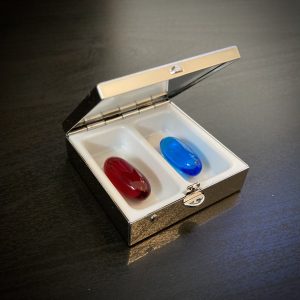
“It is a reminder,” she says. “To pause before repeating a familiar choice. What am I expecting this to give me? Where did that expectation come from? And does it fit the life I want to build?”
“Are you asking me to adopt your beliefs instead?” he asks.
“I am asking you to examine yours,” she replies. “And to examine mine too.”
She gives him the box.
The champagne was presented as a symbol of success. The gift offers something different: a moment to question the association.
Am I celebrating what matters to me—or repeating what my culture has taught me a celebration should look like?
Culture Story 2: Why Do I Believe What I Believe?
The clip below comes from Netflix’s Trust Me: The False Prophet, a documentary about Samuel Bateman’s coercive group and the exposure of his crimes, including the sexual abuse of children.
The comparison I want to explore is not between those crimes and ordinary drinking. It is about the influence of an environment: how beliefs can become bound up with identity, belonging, and fear—and what happens when someone begins to question them.
As you watch, consider this: which beliefs can you recognize as learned in her story—and which beliefs about alcohol have you learned from your own culture without questioning them?
When Obedience Feels Like the Right Direction
The speaker describes being taught throughout her life that obedience was everything. Yet that obedience brought her somewhere she never expected: prison. That contradiction prompted her to wonder about her beliefs. Her account raises an uncomfortable question. Can something feel right within a familiar system while leading to consequences we would never consciously choose?
That is a question I also bring to drinking culture. The messages may be familiar: alcohol helps us celebrate, relax, socialize, and belong. But how often do we examine where repeating those expectations is taking us?
Following a familiar custom does not automatically mean it supports the future we want.
One Question Can Open the Door to Many More
The speaker describes a conversation in which she recognized that Bateman was lying to her. Afterwards, she says:
“Once I questioned one little thing, then a whole flood, like a tsunami of questions came in.”
One of those questions goes directly to the heart of this chapter:
“Why do I believe the way I believe?”
For MeRise, this is the strongest connection to the Alcohol Matrix. Not a claim that the situations are identical, but an invitation to examine what we have accepted without questioning.
Why do I believe a celebration needs alcohol?
Why do I give the drink credit for the connection I feel with other people?
What do I expect it to solve—and what happens afterwards?
Questioning one expectation can make room to examine others. It does not prove every conclusion in advance. It creates an opportunity to look more closely.
What I Call Love May Deserve a Closer Look
The speaker makes an important distinction:
“I thought I was in love with him, but now looking back, I understand it was complete fear.”
She is describing her own experience of coercive control. Her words should not be reduced to a simple claim that she loved someone and then changed her mind.
The reflective question I take from this is: do I understand what is underneath my own attachment?
Someone reconsidering alcohol might ask whether they enjoy the experience, fear losing a sense of belonging, expect relief from discomfort, or feel several of those things at once.
Not every desire is fear in disguise. But something feeling familiar—or even valuable—does not put it beyond examination.
An Inherited Belief Did Not Begin With Me
The speaker explains that she could not simply blame her parents for the framework she grew up in:
“They were born in lies.”
Her words refer to her upbringing. The question for drinking culture is about transmission: what have we learned from people who also inherited their expectations from others?
Our parents, friends, and role models may have learned to associate alcohol with hospitality, adulthood, pleasure, and success. They do not need to intend harm for those associations to be passed on.
I can respect the people who shaped me without accepting every belief I learned from them.
The aim is not to blame previous generations. It is to decide what we want to carry forward.
Seeing a Former Self Differently
The speaker says that she now sees the girl she was “in third person” and later describes that former self as “an entirely different person.” That distance is part of her account. It is not proof that everyone must experience the same identity change when reconsidering alcohol.
But the capacity to look back differently is meaningful. We can recognize that an earlier version of ourselves acted within a framework we no longer accept. We can learn from that without making shame our identity.
Change also need not happen through insight alone. In her published interview, Naomi describes reading, questioning, and important support from people outside the group. Similarly, someone changing their drinking may need practical tools, treatment, connection, and time alongside reflection.
Understanding a pattern matters. Struggling with it does not mean someone lacks understanding or worth.
What This Story Invites Us to Examine
This clip does not establish that drinking culture and a coercive group are the same. It does show a person describing how deeply an inherited framework shaped what felt true—and how questioning became possible.
For MeRise, the “Alcohol Religion” metaphor is a way to make familiar expectations visible. It should not become another framework that readers are told to accept without examination.
The World Health Organization identifies cultural and social norms as influences on drinking. We can scrutinize those norms, marketing, and public policy without assuming that everyone involved has the same motives.
Which beliefs about alcohol have I examined for myself—and which have I simply inherited?
Start with one. Ask where it came from, what supports it, and whether it serves the life you want to build.
Culture Story 3: When a Belief Becomes a Loyalty Test
This true story refers to the implosion of the submersible Titan in 2023, during a descent to the Titanic wreckage. All five people on board were killed instantly. The incident sparked investigations and documentaries exploring the causes and circumstances surrounding the tragedy.

The video below raises an uncomfortable question: what happens when a belief becomes so closely tied to someone’s identity that questioning it feels like a personal attack?
In the clip, a contributor describes how OceanGate CEO Stockton Rush came to identify himself with the company and its mission. Criticism of the operation, he suggests, was received as criticism of Rush himself.
That is the danger I want to highlight. Conviction can drive innovation—but when it puts an idea beyond scrutiny, confidence is no longer a substitute for evidence.
Titan used a carbon-fiber composite pressure hull whose safety and durability for repeated deep-sea dives OceanGate had not adequately established. The issue was not simply that carbon fiber was a forbidden material or that no testing took place. It was inadequate engineering validation, testing, and assessment of the hull’s condition.
The Coast Guard Marine Board’s 2025 report also describes an authoritarian, toxic safety culture in which concerns were suppressed. OceanGate dismissed operations director David Lochridge after he raised safety objections and later sued him after he reported concerns to OSHA.
The clip calls Lochridge an “unsung hero” for refusing to compromise his professional standards. It also shows the financial and personal toll of the legal dispute.
A culture becomes dangerous when protecting the story matters more than examining the evidence.
What Does This Have to Do With Drinking Culture?
The situations are not equivalent. Declining a drink is not the same as raising engineering objections and facing litigation. But the clip prompts a useful question about how groups respond to dissent.
If alcohol is closely associated with celebration, friendship, or belonging, questioning it may feel to others like questioning the occasion—or the people taking part.
Someone says, “I do not want to drink,” and instead of accepting that choice, others may ask, “Why? Do you have a problem?”
Notice the shift: attention moves from the person’s decision to whether something is wrong with them. The familiar custom remains unquestioned.
Within the Alcohol Matrix framework, I want to make that shift visible. We can question alcohol’s place in a culture without rejecting the people within it. We can also choose differently without having to defend our worth.
Self-Belief Must Leave Room for Evidence
The lesson is not simply that culture deserves all the blame. Leaders, individual decisions, technical failures, and oversight matter too. A harmful culture can make warnings easier to dismiss; it does not erase anyone’s responsibility.
For MeRise, self-belief should mean having the confidence to examine a claim, ask difficult questions, and maintain a boundary—even when the group does not welcome it.
It should also mean being willing to reconsider our own conclusions.
Does this culture allow me to question its promises—or does it make belonging depend on accepting them?
That is the question to carry from this story into our own lives.
Culture Story 4: When Winning Becomes the Justification
For years, Lance Armstrong represented an extraordinary success story. He won the Tour de France seven consecutive times between 1999 and 2005. In 2012, all seven titles were stripped following doping findings.
The clip below brings that public story into conflict with his own admissions. Asked whether he used banned substances or blood doping during those victories, Armstrong answers: yes.
Then comes the question that makes this a story about culture as well as individual conduct. Did he believe winning seven consecutive Tours without doping was possible?
“Not in my opinion.”
Notice the distinction. He is describing his belief about what success required. That does not establish that every rider doped or that he had no choice. But it raises an important question: what happens when a culture makes a harmful choice feel like the necessary price of belonging or succeeding?
Understanding the Culture Does Not Remove Responsibility
It would be incomplete to discuss Armstrong only as an isolated individual making isolated decisions. USADA documented an organized team doping programme. But it would also be wrong to present him simply as a victim of that environment. Its findings describe his active role in sustaining the programme, including pressure on teammates to participate.
Culture influenced the choices people faced. Armstrong also helped shape that culture.
That is why his closing statement deserves attention:
“I didn’t invent the culture. But I didn’t try to stop the culture.”
Not creating a custom does not mean we have no role in reinforcing it. We can inherit an expectation, benefit from it, defend it, and pass it on—all while telling ourselves that this is simply how things work.
The question becomes more personal: am I only following the culture, or am I also helping maintain it?
The Perfect Story Can Hide an Uncomfortable Reality
Armstrong reflects on the image surrounding him: overcoming illness, winning repeatedly, and having a family. He calls it a “mythic, perfect story,” then adds:
“And it wasn’t true.”
His words expose the gap between an admired public narrative and the conduct behind it. They do not tell us everything about his private happiness, or prove that he has resolved every consequence of his actions.
For MeRise, the lesson is this: an outcome can look impressive without validating the choices that produced it. Applause does not settle a question of honesty or values.
If we only ask, “Did it help me get the result?”, we may overlook another question: what did I compromise to get there?
What Can We Recognize in Drinking Culture?
Competitive doping and drinking alcohol are different situations, with different rules, harms, and responsibilities. The parallel is not that they are identical. It is the way a shared expectation can make a choice feel necessary and discourage us from examining it.
Around alcohol, the expectation might be: this is how we celebrate; this is how we relax; this is how we belong.
When those messages are familiar, we may stop noticing that they are beliefs at all. Other people’s participation can then become reassurance: if this is what everyone around me does, why should I question it?
Within the Alcohol Matrix framework, that is the moment to look beyond the familiar promise.
Could I enjoy this occasion without alcohol?
Does this choice support what matters to me beyond tonight?
Am I freely choosing—or accepting an expectation I have never examined?
Questioning the custom does not mean condemning the people who participate in it. It means refusing to let familiarity do all our thinking.
What Do I Want My Choices to Reinforce?
For MeRise, this story opens a question beyond winning: what kind of success do I want to pursue, and can I reconcile it with my values?
For me, success should be something I can stand behind—not simply something other people admire.
Self-belief is not confidence that makes my choices immune to criticism. It is the confidence to examine them, acknowledge their costs, and change direction when they no longer fit my values.
I may not have created the culture around me. But I can decide what I want my own actions to reinforce.
Culture Story 5: A Culture Is More Than Its Values Statement
A few seconds at a concert turned into an international story.
At a Coldplay concert in Massachusetts in July 2025, Astronomer CEO Andy Byron and chief people officer Kristin Cabot appeared on the venue’s large screen in an embrace. When they noticed the camera, they moved out of view.
The clip attracted enormous attention. But beyond the jokes and speculation is a more useful question: what do we expect from the people responsible for setting a company’s culture?
Both subsequently resigned. Astronomer said its leaders were expected to set the standard in “conduct and accountability” and that this standard had not been met.
That statement matters. A company’s culture is not only what it writes on its website. It is also shaped by the conduct people see, the boundaries leaders maintain, and the way concerns are handled.
Leadership Does Not Stop at the Office Door
A CEO and a chief people officer occupy positions of trust. Their roles make questions about professional boundaries and conflicts of interest especially important.
That does not give the public unlimited knowledge of their private lives. The short clip does not establish a continuing affair, the circumstances of their marriages, or the full findings of the company’s investigation. Nor can one incident tell us everything about an entire workplace.
What it does prompt us to consider is the relationship between stated values and personal choices.
Do the standards I endorse also guide me when I feel relaxed, celebrated, or outside my usual environment?
Do I see a boundary clearly—or assume that a different setting makes it less important?
These are questions for reflection, not a claim that we can read someone’s motives from a camera reaction.
Where Does Alcohol Fit Into This Story?
The footage itself does not establish drinking or intoxication. There is, however, a later account from Cabot. In an interview reported by the BBC, she said she had consumed alcoholic drinks, danced, and acted inappropriately with her boss.
That is her retrospective account. It does not prove that alcohol caused the conduct, establish her level of intoxication, or tell us whether Byron had been drinking.
For MeRise, it opens a question rather than settling one: when we associate alcohol with freedom, relaxation, and fun, do we also examine whether the experience supports our boundaries and longer-term priorities?
Within the Alcohol Matrix framework, the invitation is to look beyond the immediate moment. Enjoyment now is not a complete assessment of what a choice may mean afterwards.
But examining alcohol’s role should not become a way to erase personal responsibility—or invent an explanation where the evidence is incomplete.
We Are Also Part of a Culture of Judgment
There is another cultural influence worth noticing: how quickly a short video, a caption, and a joke can become a complete story in our minds.
The clip shows an embrace. It does not show a kiss. Public reporting confirms resignations, but that does not validate every claim attached to the footage.
If this chapter asks us to question inherited assumptions, that principle must apply here too. We cannot challenge one culture’s unquestioned beliefs while accepting another culture’s speculation as fact.
Accountability and dignity can coexist. We can examine leadership decisions without treating harassment or humiliation as a form of justice.
The Question to Bring Back to Ourselves
The point is not to decide that two people represent everything wrong with a company—or that a public mistake defines someone forever.
It is to examine how an environment, a role, and the expectations around us interact with our own choices.
What kind of culture do my actions reinforce—and do those actions reflect the values I say matter to me?
Culture Story 6: The Great Exhibition—What Are We Really Promoting?
Merise arrives at a business exhibition expecting to meet people, explore ideas, and discover opportunities. At the entrance, she receives something she did not ask for: a token for a free beer.
A small gesture. But what message comes with it?
Before the first business conversation has begun, alcohol has already been introduced as part of the experience.
In the arrangement described here, visitors receive a beer token, while standholders have access to drinks included in their exhibition package. Visitors can then be offered more drinks through the companies they meet.
Merise looks beyond the token. Alcohol is not simply available at the event; it is woven into the hospitality. The suggestion is familiar: a drink helps people relax, connect, and get the conversation flowing.
But why should a business conversation need alcohol to get started?
When Hospitality Becomes a Cultural Message
The organizers may intend to create a welcoming atmosphere. Standholders may simply want to be generous. Neither needs to intend harm for the arrangement to reinforce a belief: drinking belongs alongside doing business.
Each offer can make that association feel more ordinary. A visitor who arrived to discuss products or partnerships may find that accepting a drink has become part of the social routine.
The World Health Organization identifies cultural norms and alcohol availability as influences on drinking. The question here is not whether one token inevitably creates a problem. It is what happens when the same expectation appears repeatedly across professional and social settings.
If we keep presenting alcohol as a tool for connection, what are we teaching people to expect from it?
Networking Should Not Depend on Drinking
As the event continues, some conversations may become more focused on drinking than on the reason people came. A visitor who chooses not to drink may feel less comfortable or wonder whether declining changes how others respond.
That does not mean sober people cannot connect with people who drink. It means the event should not make alcohol the price of participation.
Within the Alcohol Matrix framework, Merise asks whether the atmosphere of the bubble is being mistaken for the value of the business relationship.
Are we connecting through shared interests and useful ideas—or assuming the drink deserves the credit?
Would this conversation still matter tomorrow?
Could the event offer the same warmth without repeatedly offering alcohol?
The companies have invested in a professional setting. Their hospitality also communicates something about what they value. It is reasonable to ask whether the message fits the purpose of their investment.
Responsibility Goes Beyond the Last Drink
When the exhibition ends, visitors leave—and some get behind the wheel.
Choosing to drive while impaired remains the driver’s responsibility. But if an event repeatedly encourages drinking, we should also examine the decisions made before anyone reaches the car park.
What expectations have the organizers and participating companies created? Is alcohol presented as part of successful networking? Can visitors decline without feeling excluded? Are other drinks just as accessible, and has safe transport been considered?
These questions do not excuse unsafe driving. They widen the discussion from the individual’s final decision to the environment surrounding it.
Holding someone accountable does not mean leaving the culture around them unquestioned.
An event without a reported accident is not proof that its approach is harmless. Nor do we need a tragedy before asking whether the arrangement makes sense.
The question is bigger than getting home safely: why make alcohol part of the expectation at a business event in the first place?
Prevention starts before the journey home. It starts with what we offer, what we encourage, and what we teach people to regard as normal.
What Does Your Company Want to Offer?
For MeRise, the challenge is not to dismiss everyone in the room as foolish. It is to question a familiar shortcut.
A business event can create opportunities through thoughtful introductions, interesting demonstrations, and conversations worth having. Your visitor should not need a beer token to feel welcome. Your visitor didn’t ask for any alcohol related (beer brand) marketing. Why do people believe that alcohol should add something to businesses relationships?
If your company offers alcohol as a way to connect, consider what you are inviting clients to associate with your business.
Is the opportunity in the drink—or in what you actually have to offer?
If we believe our ideas are worth discussing, why not build an environment where the conversation can stand on its own?
Culture Story 7: Alcohol and Sport—What Are We Really Celebrating?
The race ends. The top three drivers step onto the podium. We applaud their skill, their commitment, and the work of the teams behind them.
Then the bottles appear.
The spraying, the laughter, the celebration—it is such a familiar image that we may hardly question it.
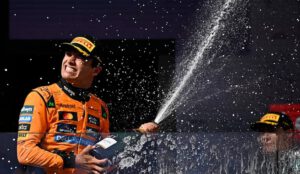
Why has an alcoholic drink become one of the symbols of sporting achievement?
This association is not simply an accidental tradition. In 2025, Formula 1 announced Moët & Chandon’s return as its official champagne partner, explicitly linking the brand with podium celebrations and the sport’s history of success.
For me, that is the cultural contradiction worth examining. The achievement comes from the drivers and their teams. Yet an alcohol brand takes its place beside them at the moment of greatest recognition.
The bottle did not produce the performance. Why does it belong in the picture of success?
When a Product Borrows the Meaning of an Achievement
Sponsorship places a product in an environment people admire. In this case, the association is with victory, excellence, and celebration.
That does not mean every viewer accepts the message or starts drinking. But it gives us a reason to examine what the familiar image invites us to associate with alcohol.
We may come to see the drink as the finishing touch—the reward that makes a successful moment complete. Within the Alcohol Matrix framework, this is the belief I want to question: does alcohol add the meaning, or have we learned to give it credit for meaning that already exists?
The Achievement Does Not Need Alcohol
A celebratory bottle does not always contain alcohol. Formula 1 also announced French Bloom as its official alcohol-free sparkling wine partner in September 2025, with availability in its operated hospitality spaces. That announcement does not establish what was used on any particular podium, but it reminds us not to infer contents from appearance alone.
More importantly, the result of the race does not depend on the drink used afterwards.
The victory, the emotion, and the shared effort already have their own value. We can celebrate those things without treating alcohol as the ingredient that completes them.
Would the achievement mean less without an alcohol brand beside it—or have we simply learned to expect one?
A few motivational clips around culture, beliefs and boundaries