Alcohol is a fun way to escape, until you try escaping from alcohol.
Escape
From Escape to Opportunity
What if “How do I escape alcohol?” is the wrong starting question?
How about asking: “What could I gain by leaving the crap that comes with alcohol behind—and reshaping the beliefs that keep me returning to it?”
Instead of focusing only on what you fear losing, explore what you want to regain, protect, or build: better mental well-being, greater clarity, and a future you genuinely want to move towards.
Start questioning your limiting beliefs by defining what you stand to gain. Be specific about what drinking costs you—and what those costs mean for your future.
Find your why. Give yourself a reason to move towards something, not merely away from alcohol.
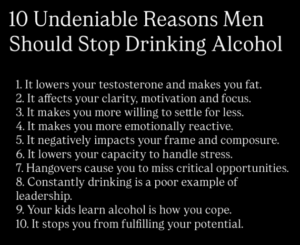
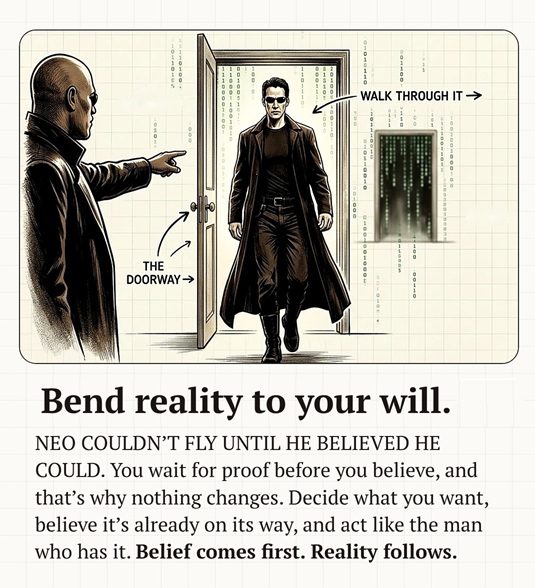
You Don’t Have to Hate Alcohol to Leave It Behind
Adapted from an expert’s personal account:
I spent months trying to hate alcohol. I focused on hangovers, regret, and embarrassing moments. I reminded myself of the times drinking left me feeling sick, anxious, or out of control.
The plan was simple: hate it enough, and I would stop wanting it.
But for me, hatred kept alcohol emotionally important. I was still giving it attention and allowing it to occupy my thoughts. And beneath that hatred, part of me continued to associate drinking with fun, relaxation, and connection. Trying to convince myself otherwise felt forced.
The turning point came when I began changing what alcohol meant to me. Instead of trying to hate it, I gradually became indifferent to it.
Not love. Not hate. Just something I no longer wanted.
As that understanding settled, my cravings disappeared. I no longer felt that I was resisting something valuable or denying myself an essential pleasure. Alcohol simply stopped fitting the life I wanted.
Eventually, it felt as irrelevant to my choices as motor oil: not something I needed to hate, negotiate with, or keep thinking about.
For me, freedom came not from strengthening my opposition to alcohol, but from no longer believing I needed it.
Set SMART Goals
Instead of making resistance your whole strategy, define what you want to gain.
If part of you still believes alcohol offers something valuable, saying “I must resist it” can leave that promise untouched. Within the Matrix framework, the shift is to question the promise—and give your attention to something worth protecting.
One opportunity may be closer than you think: protect your sleep and observe what changes in your mornings.
Make the goal SMART: specific, measurable, achievable, relevant, and time-bound. For example:
“For the next two weeks, I will follow a consistent bedtime routine and record how rested, clear-headed, and energetic I feel each morning.”
The change is from “I need to resist drinking” to “I want to protect the rest that supports my life.”
When drinking repeatedly disrupts your sleep, waking up tired or foggy can become familiar. But familiar does not mean inevitable. Give yourself room to discover how different your days can feel when better rest becomes a priority. Improvement may take time; the aim is to notice your own experience, not demand a perfect result.
Two Reasonable Questions:
What Would My Future Self Want Me to Do Today?
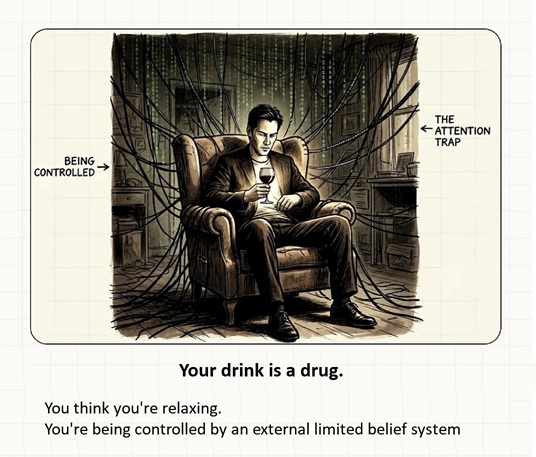
Should I enter the Matrix bubble for a temporary sense of well-being—whether through pleasure or relief from boredom, loneliness, or discomfort?
Or should I protect my rest and give myself a better chance of waking up clear-headed, energized, and ready to move towards the life I want?
What feels appealing now—and what will I value tomorrow?
Did Yesterday’s Choice Support the Life I Want Today?
If I drank yesterday, did it help me wake up clear-headed today?
How did it affect my sleep, energy, mood, and ability to follow through on what matters to me?

Your Daily Statement
“By choosing not to take the blue pill—alcohol—I am changing the pattern and choosing a different direction.”
Leaving alcohol aside is not only about avoiding its costs. It is about creating room for rest, recovery, and greater clarity—giving yourself a stronger foundation for facing life’s challenges and developing your potential.
You are not simply moving away from alcohol. You are moving towards what can become possible without it.
Allow Time for the “Artifacts” to Settle
Within the Matrix metaphor, “artifacts” are what remains after the bubble fades: aftereffects, learned expectations, and familiar urges that can keep alcohol’s promise alive.
Anxiety, tiredness, cravings, boredom, or loneliness may make another bubble seem appealing. These feelings are not always caused by alcohol, but they can become linked to the expectation that drinking will provide relief.
Give yourself time to discover what changes when you stop returning to that promise.
Changing familiar habits and stepping back from drinking culture can be a gradual process. Allow yourself months, if needed, to build new routines and discover different ways to experience comfort, connection, and excitement. There is no fixed deadline for feeling better, and you do not have to handle persistent difficulties alone.
Sometimes, protecting your rest—such as going to bed earlier—may feel like stepping away from excitement or moving backwards. But choosing a quieter evening can also be an investment in tomorrow’s energy, clarity, and possibilities.
You are not putting life on hold. You are building a stronger foundation for the life you want.
Applying the “Nothing Rule”
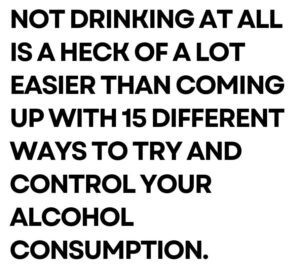
MeRise is not here to tell you what to do. But consider why, for some people, not drinking at all feels simpler than continually negotiating how much to drink.
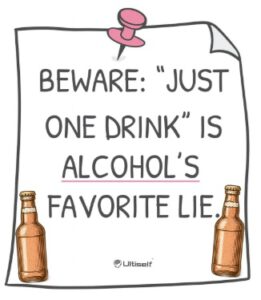
The nothing rule is straightforward: no alcohol today. Not “just one,” not “only on this occasion,” and not another debate about where to draw the line.
Within the Matrix framework, the first drink opens the door to the experience you have learned to expect. Alcohol can impair judgment and lower inhibitions, making the boundary you set beforehand harder to maintain. The familiar promise returns: “This feels good. Why not have another?”
That does not mean one drink inevitably leads to more. But if it repeatedly restarts a pattern you want to leave behind, why keep treating it as an exception?
The negotiation may sound familiar:
“I am in control.”
“One drink will not hurt.”
“I have been sober for a while—I deserve it.”
Notice what these arguments protect: the belief that alcohol remains something valuable you should keep available. Feeling good in the moment can make that belief convincing again, while the reasons you wanted to change become easier to overlook.
You do not have to keep testing a promise you no longer trust.
Nor do you have to settle your entire future today. If “never again” feels overwhelming, bring the decision closer: what supports the life you want today? Fear about change can be genuinely felt without proving that you need alcohol or will lose something essential by leaving it behind.
“One day at a time” can make the commitment more manageable. It is not a guarantee that every day will be easy. It is a way to stop turning today’s choice into an argument about every celebration, holiday, or difficult moment still to come.
The nothing rule is not a punishment or a test of your worth. It is a clear boundary that can free your attention for something more meaningful than negotiating the next drink.
Conclusion
If moderation keeps pulling you back into a pattern you no longer want, you do not have to keep that door open.
Have confidence in your reasons, give the process time, and seek support when you need it. A difficult day—or a setback—does not erase your direction.
No alcohol today. More room for the life I am building.
 Learn about Pavlov’s famous conditioning experiments to explore how familiar cues and expectations can reinforce drinking habits—and how those learned associations can weaken when we stop reinforcing the old pattern. Video credit: Craig Beck.
Support Your Well-Being Through Appreciation, Water, and Movement
Appreciation. Write down a few things you are grateful for each day. They do not have to be extraordinary: a meaningful conversation, a peaceful moment, or something you enjoyed. This practice encourages you to notice what is already supporting you, without pretending that difficulties do not exist.
Water. Hydration is easy to overlook. Drink water regularly throughout the day to support your body’s needs. It is a simple act of care—not a way to “flush out” alcohol or speed up recovery.
Movement. Walking or another activity you enjoy can help reduce stress and improve your mood. You do not need an intense workout to begin. A walk offers a change of surroundings, something purposeful to do, and an opportunity to step away from repetitive thoughts. Walking with someone can also provide connection.
If boredom, loneliness, anger, or anxiety tends to trigger the urge to drink, consider what you actually need in that moment. Movement might offer an outlet; conversation might offer connection; rest might offer relief. These are opportunities to respond differently—not guarantees that every craving will disappear.
The aim is to build sources of comfort and engagement outside the bubble.
Raise awareness to your own beliefs, instead of what alcohol promises to “provide”. Video Credit: Andy Ramage.
Be Patient: Change Is a Process, Not Just One Decision
Changing a familiar pattern is not always the result of one conscious decision. It takes time to reshape the habits and expectations you have reinforced over the years.
The process may unfold over months or longer. There is no fixed deadline—and you do not need to turn it into a race. What matters is the direction you are building.
Familiar situations, such as social events, and urges, such as cravings, may continue to bring the old promise to mind. Recognize those moments as opportunities to notice what you expect from alcohol and practise a different response.
An old expectation returning does not mean you are back at the beginning.
Keep using your mirror to examine the pattern: what triggered the urge, what did alcohol seem to promise, and what choice supports your life beyond the bubble? See the Mirror tab.
Give yourself time, patience, and room to learn.
Understand How Fear Can Protect a Belief
Changing your drinking can bring fear to the surface—especially when you begin considering life without alcohol. But what, exactly, are you afraid of losing?
If alcohol still represents relaxation, celebration, or connection, leaving it behind may feel like giving up something essential. Within the Matrix framework, that fear can protect the familiar belief: “I need this to feel comfortable.”
The fear is genuinely felt. The prediction behind it deserves questioning.
Will life really become less enjoyable? Is alcohol the only way to meet that need? Have you mistaken something familiar for something necessary?
We may defend the old promise with reassuring statements:
“I am in control.”
“I could stop whenever I wanted.”
“It is just how I relax.”
Those statements do not automatically prove dependence. But if they repeatedly close down an honest examination of the pattern, ask what they are protecting.
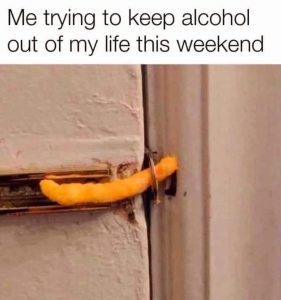
Even jokes about drinking can make the habit seem harmless or beyond questioning. The point is not to condemn the joke—or the person making it—but to notice when humour becomes another way to avoid looking closely. Listen to the deeper feelings, examine the promise, and give yourself room to discover a different experience.
When the Door Feels Impossible to Close
The Matrix can become a frightening doorway—one we recognize as harmful, yet feel afraid to close.
Imagine that door from the perspective of someone dependent on heroin. Returning may no longer be mainly about pleasure. It may be about temporarily relieving the physical and emotional distress of withdrawal. What leads to further harm can begin to feel like the only way to get through the day.
Within the metaphor, the doorway into suffering starts to look like a doorway to rescue.
Now tell that person, “You only need to close the door to escape the Matrix.” Imagine the fear that instruction could create when they do not yet see another way to manage what lies ahead.
That fear is not imaginary, nor is it proof of weakness. Physical dependence cannot simply be dismissed as a mistaken belief. Treatment and support can help someone find a way forward without relying on the substance for relief.
Feeling unable to close the door can erode self-esteem, confidence, and a sense of freedom. But difficulty leaving does not mean the person is broken.
The question is not simply, “Why won’t you close the door?” It is, “What would help you feel able to leave—and stay outside it?”

The Conflict Behind the Fear
For some people trying to stop drinking, the pattern can feel like this:
The belief: “Alcohol makes me confident. I have no problems. I am in control. I can moderate. Let’s celebrate.”
The pleasure: Drinking provides a temporary sense of well-being, which seems to confirm the belief.
The fear: “I know this pattern is costing me something. But what happens if I change it? What if I return to drinking and feel guilty or ashamed? And what if I succeed—what will life without alcohol look like?”
This can become a rollercoaster of expectations, uncertainty, and fear. Within the Matrix framework, the familiar promise remains appealing while the alternative feels unknown.
The fear is real, but it does not prove that alcohol is necessary. It invites us to examine what we expect to lose—and what we might gain.
A Reflection from Avicii’s Journal
Tim Bergling, known as Avicii, died in 2018 at the age of twenty-eight. Journal excerpts reported from Tim — The Official Biography of Avicii reveal how difficult he found the prospect of leaving alcohol behind:
“I had a hard time accepting never drinking again…”
He also described doctors advising him to avoid alcohol for at least a year, and his decision to follow the more reassuring advice of a minority rather than the majority.
For MeRise, these words invite reflection on how difficult it can feel to leave something we still associate with relief. Understanding the conflict should lead to greater compassion—not another demand that someone simply overcome their fear.

Armin van Buuren: Building a Life Beyond Alcohol
Another world-famous DJ, Armin van Buuren, has spoken openly about changing his relationship with alcohol. His account includes professional support, therapy, meditation, and healthier daily routines—not simply a decision to stop drinking.
In a 2025 interview, he described roughly ten years of drinking, followed by five years without alcohol. His experience offers a personal perspective on what can change when drinking no longer occupies the same place in someone’s life.
In his 2025 Men’s Health interview, he explained:
“Five years ago, I stopped drinking alcohol completely. I noticed that I had become increasingly distant from myself and was no longer happy.
“I had lost my enjoyment of DJing, but felt that, as a successful DJ, I had no right to feel unhappy. I had everything: a lovely wife, two fantastic children, a beautiful house, and a successful career. Yet, especially while touring, I often felt deeply lonely. The constant pressure of life as a DJ also weighed heavily on me.
“It was time for a major change. Quitting drinking was the first step.”
Translated from the Dutch Menshealth Interview
The interview also describes how exercise, nutrition, sleep, meditation, and therapy became parts of his broader transformation. The accompanying magazine cover highlights his physical progress; his words explain what that journey meant to him mentally.
For MeRise, the connection is clear: leaving alcohol behind can create room to build something else. See the Transformation tab, under Physical Activities, for more on movement and well-being.

How to Recognize Fear
Imagine taking the Matrix out of the equation. Instead of focusing on the bubble you might lose, consider the space you could regain: freedom, energy, clarity, and room for a more fulfilling life.
The fear may still feel real. But feeling afraid of the future does not mean the future will be what you fear.
Within the Matrix framework, the misleading promise is that leaving alcohol behind means losing something essential. Recognize that prediction—and examine it rather than automatically accepting it.
Look back to build confidence in moving forward. What has drinking actually given you over time? What has it cost? What have you experienced during periods without it?
An attempt to leave can become caught in negotiation: “What if I need it? What if life feels less enjoyable?” Those questions leave the familiar promise open for reconsideration.
A decision to leave begins with a different understanding: “This pattern no longer supports the life I want. I am ready to give another direction a chance.”
That does not mean fear disappears or that change becomes effortless. It means fear no longer has to make every decision for you.
Faith is the opposite of fear, but somehow the same as it is a spiritual guidance: faith it is not certainty about everything ahead, exactly like fear. But it is confidence that your future does not have to repeat your past.
Fear by Annie Grace (author of The Naked mind).
Cravings thoughts come from somewhere. They may feel random, but they’re usually rooted in something deeper, a fear, an insecurity, a hurt you’ve been carrying. They don’t need to be drowned out. They need to be heard. What if, instead of running from those thoughts, you got curious about them? What if the next time that inner voice popped up, you asked yourself:
- What’s behind this thought?
- What is it trying to tell me?
- What could happen if I listened, instead of avoided?
Sitting with those thoughts instead of drowning them out, could be the next step on your path to freedom. What’s the noise in your head trying to tell you? Take a moment. Sit with it. You should bring yourself in a place of awareness and acceptance, taking note of moments when you experience fear and allowing yourself to feel it and observe it, to slowly take its power away, by moving through it rather than around it. Invite fear in. Be with it. Love it. Learn about it, and learn from it. See what fear has to teach you about yourself.


How to Deal With Fear
A belief-focused reflection inspired by Darryl Anka
Start by asking what your fear is responding to—and what you believe might happen next.
The text and video below invite you to examine how beliefs influence emotions. This is a useful perspective, though not a complete explanation of every feeling. Fear can also involve automatic protective responses and physical processes.
If a car speeds towards you, fear alerts you to a genuine danger and helps you respond. That fear serves your safety. It is not something you need to dismiss as an illusion.
But fear can also arise from an expectation you have not yet tested.
Within the Matrix framework, you may fear leaving alcohol because you still believe it provides something essential: happiness, confidence, connection, or relief. Over time, that expectation may become deeply familiar: “How will I cope without it?”
The feeling deserves attention. The promise behind it deserves examination.
You can use fear constructively by working backwards from the emotion to the expectation. Ask yourself:
- What do I believe will happen if I do not drink?
- What need am I expecting alcohol to meet?
- What does my experience show—both inside the bubble and afterwards?
- What other ways could I respond to that need?
These questions can bring an automatic expectation into conscious awareness. Perhaps you discover that “I cannot enjoy myself without alcohol” is a belief you have repeatedly reinforced, rather than a conclusion you have fully examined.
Recognizing that difference creates room for another response.
You do not need to condemn yourself for having learned the belief. Nor do you need to force every fear to disappear before moving forward. You can acknowledge uncertainty while giving yourself an opportunity to experience something different.
The aim is to distinguish what protects your well-being from what protects a familiar pattern. Does the choice support your health, values, and future—or keep you returning to a temporary promise whose costs you no longer want?
Use fear as information, not as an instruction to return to the Matrix. Question the promise, respect your actual needs, and move towards the life you want to build.
When Fear Keeps the Matrix Door Open
We fear rejection when someone invites us to drink, so we take the poison to fit in.
We fear awkwardness in social situations, so we drink to feel more confident and make the risks seem smaller.
We fear loneliness, so we reach for the bubble to soften the feeling of disconnection.
We feel exhausted after a long day and dread more demands or overthinking. Alcohol promises to “stop the clock” and give us a break.
We believe happiness should be our only acceptable emotion, so discomfort becomes something we feel compelled to escape.
We fear uncertainty—even uncertainty about what to believe. So we keep the Matrix door open, ready to return to something familiar.
Within the Matrix framework, that is the pattern worth examining: the promise of relief can remain convincing even when drinking contributes to the discomfort we want relieved.
What are you actually afraid of? Rejection? Loneliness? An uncomfortable evening? The possibility that life will feel different?
Those feelings are real. But they do not automatically prove that alcohol is the answer.
Ask whether drinking helps you address the fear—or merely makes it quieter inside the bubble while leaving you to face it again afterwards.
The fears of Charlie Sheen (two and half man series) – as seen by his colleague.
You Can’t Ignore the Whole Picture
The Alcohol Matrix describes a belief system that can keep a drinking pattern familiar and convincing. For some people who drink regularly, the next bubble offers relief while the costs outside it become easier to overlook.
As long as alcohol seems to make things feel better, the question remains unanswered: is it improving life—or temporarily covering discomfort while contributing to more of it?
Those “artifacts” can accumulate gradually. When someone considers cutting back, fear may emerge: “What will I lose? How will I cope?” If drinking remains the familiar answer to discomfort, that fear can make returning seem appealing again.
Within the metaphor, the Matrix’s invitation is simple: “Keep believing in the promise. Keep coming back.”
But seeing the whole picture can change how convincing that invitation feels.
The more honestly you examine your experience, the more firmly you can connect with your values and the life you want. That does not make you untouchable or remove every fear. It gives you a stronger foundation from which to respond.
The shift is not to pretend fear does not exist, but to stop allowing it to protect a promise you no longer trust.
Replace fear-led negotiation with faith in a different direction. Here, faith means confidence that you can learn, change, and build sources of joy, connection, and authentic self-expression beyond the bubble.


What if you began to look beyond the Matrix’s promises and recognize the “artifacts” it leaves behind? Would leaving still feel like losing something valuable? In the video below, Craig Beck explores the fear of failure—and even the fear of success.
Meet Jim Carrey, about the direction we should choose, in relation to fear:
Peace and Fear
Peace can grow when your choices align with what matters most to you—not because every fear disappears, but because fear no longer makes the decision.
Think of a woman who chooses to avoid alcohol during pregnancy out of care for her unborn baby. Her reason gives the decision meaning: she is protecting something she deeply values, rather than simply resisting something she wants.
That does not mean fear, uncertainty, or cravings automatically vanish. Nor does needing support weaken her commitment. But the familiar belief that alcohol offers something essential can begin to lose its hold.
The shift is from “What am I giving up?” to “What am I choosing to protect?”
Within the Matrix framework, this is an opportunity to question the promise behind the fear—and find a stronger reason to move beyond it.
Peace through the storms (Credits: Annie Grace)
Have you ever thought that to have peace (the true, lasting kind) you need to have a life free from any troubles? It’s a common misconception – that inner peace only goes hand-in-hand with a trouble-free existence. But what if I told you that’s not the case at all? What if I told you that true peace is steady hands on the wheel when the roads get icy? Think of a derecho, a rare and devastating land hurricane. One minute the sky is clear, the sun is shining, and a gentle breeze whispers through the trees. The next, the wind howls like a banshee, tearing through the landscape, uprooting trees, and tossing debris like confetti. Life can be like that sometimes, can’t it? One minute we’re sailing smoothly, the next we’re caught in a tempest. Loss, heartbreak, illness, financial struggles – these are the storms that life inevitably throws our way.
But here’s the thing: having peace doesn’t mean these storms won’t come. They will. They’re a part of life, coming in as regularly as the tides and the seasons. The difference is that when you have peace within you, the external storm doesn’t create an internal one as well. You weather the storm with a sense of calm, a knowing that this too shall pass. Peace gives you clear-headedness and clarity to deal with the troubles that life brings. It’s that inner compass, locked in and on the light that shines within you, no matter what chaos swirls around you. It means the world doesn’t bring you down because you are anchored to something deeper, something stronger. This inner peace, this unwavering sense of self, is available to all of us. It’s not about achieving some perfect state of being, but rather about nurturing a deep connection to ourselves, to that quiet place within where stillness lives.
So how do we find this peace? It doesn’t just show up overnight. Instead, it is work, daily work as these life storms pop up. It’s about mindfulness, self-compassion, and connecting to something larger than ourselves. It’s about recognizing that we are not our thoughts, our emotions, or our circumstances. We are the awareness that observes them all. The next time you find yourself caught in a storm, remember this: you have the strength to weather it. You have the inner resources to weather the fiercest winds and emerge stronger on the other side. Trust in yourself. Trust in the light within. And know that even in the midst of the storm, peace is possible.
Timescale: More Than Counting the Days
A short break from alcohol can feel more approachable than a lifetime decision. A month-long challenge, such as Dry January, offers room for curiosity: what happens to my sleep, energy, mood, and social life when I do not drink?
That can be a useful beginning. But within the Matrix framework, the deeper question is not simply whether you can complete the month. It is what you learn about the promise that keeps you returning.
If the break becomes a countdown until you can drink again, that promise may remain largely unquestioned. Instead, use the experience to examine your expectations: what did you fear losing, what actually happened, and what do you want to carry forward?
You Can Only Choose in the Present
You can learn from the past and plan for the future, but the choice you can act on is the one in front of you now.
You do not have to resolve every future celebration or difficult evening today. “One day at a time,” a principle also used in AA, brings the decision closer: what supports the life I want today?
For MeRise, the aim is to examine whether drinking still deserves the value you give it… right now.
Use the videos below as an invitation to return your attention to the present. Notice the feeling, question the expectation, and choose your actions in any given moment of now. Most people choose instant gratification to feel good NOW. But who told you that finding peace, freedom, joy, freedom and connection over time.. should require any drink now?
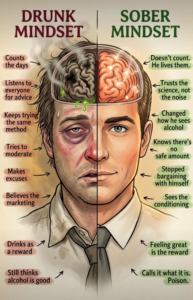
The Mindset of Someone Resisting Alcohol in the Now
“It has been a month since my last drink. I think I can have one now—I have proved to myself that I can live without it”.
“My friends and family are drinking at this party. Why not join them? Other people seem to enjoy a few drinks without any problems”.
“I have resisted alcohol for a while, so surely I deserve it. I want to relax, feel like myself, and avoid missing out”.
“Besides, I am confident that I can moderate this time.”
Notice what remains beneath the negotiation: the belief that alcohol offers something valuable. The break becomes proof that drinking can resume, rather than an opportunity to question why it still feels necessary.
Other people’s enjoyment becomes reassurance, while your own reasons for changing become easier to overlook.
The question is no longer simply, “Can I control my drinking?” It is, “Why am I still treating drinking as a reward?”
The Mindset of Someone Choosing Faith Over Fear in the Now
“I still think about alcohol sometimes, but my desires have shifted as my understanding has changed. I no longer see drinking as something that supports the life I want”.
“Alcohol feels smaller and less relevant to me now. I used to seek pleasure and belonging inside those bubbles, but I have come to recognize the costs that followed me outside them”.
“For me, drinking took attention away from my own growth. It cost me time, energy, clarity, and room to pursue my vision”.
“I do not need everyone’s approval to know why this choice matters to me. Connection still matters—but I do not need to drink to belong”.
“I value a clear mind. I want to lead my own life, grounded in who I am and guided by what I want to build”.
“Today, I choose to protect my health, time, energy, money, and freedom. I do not have to resolve every future situation. I can take the next step in the direction that matters to me.”
Within the Matrix framework, this is the shift: from negotiating with a familiar promise to giving your attention to a future you value.
It does not require the absence of every craving or doubt. It means those feelings no longer have to decide your direction.