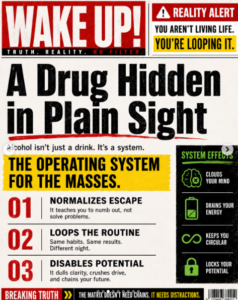
It's a belief... system.
The System
When treatment focuses mainly on changing a person’s behaviour, an important part of the picture can be overlooked: the belief system surrounding that person.
What if we also examined the belief system more closely as a system, marketed by the alcohol industry and reinforced by our drinking culture? To understand our own beliefs about alcohol, we need to recognize the system that helped shape them.
People engage with a system because they believe they will get something out of it: pleasure, belonging, relief, connection, or a better life. But what happens when those expectations are not conclusions they have reached themselves, but beliefs they have inherited from others?
This is how drinking culture can begin shaping expectations long before someone takes their first drink. Young people see alcohol associated with celebration, confidence, friendship, and adulthood. The message is repeated until the supposed benefits can start to feel like unquestionable truths.
Growing older gives us an opportunity to examine those messages again. Does the system genuinely serve us, or have we simply learned to believe that it does? What does it promise, and what does it actually deliver?
This is not about questioning your worth or treating yourself as the problem. It is about taking a critical look at a system and deciding whether it deserves your trust. You can examine a belief without condemning yourself for having believed it.
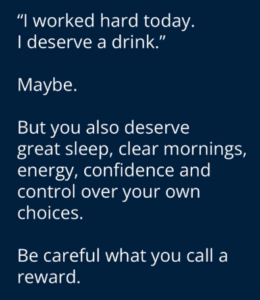
The question is not only, “How do I change my behaviour?” It is also, “Which beliefs have shaped that behaviour- and do I still want to live by them?”
The Matrix concept offers a way to visualize a system that shapes how people perceive and experience reality. Within the Alcohol Matrix, the bubble becomes a lens through which life appears more comfortable, rewarding, or connected.
Other drugs can also alter perception and create a temporary sense of entering another world. The substances and their risks differ, but the metaphor raises the same question: what happens when an altered experience becomes more appealing than the reality outside it?
Public figures such as Andrew Tate also use the Matrix metaphor, though in a different context. They describe a world shaped by powerful institutions and social expectations: go to university, take on debt, work a nine-to-five job, pay taxes, buy a home through a mortgage, and pass what remains to the next generation.
From that perspective, the question is whether the path presented as freedom and success genuinely serves the people following it- or whether it also keeps them tied to a system they rarely question. This interpretation is controversial, and the metaphor alone does not prove that a system is deliberately designed to exploit us. But it can encourage us to examine expectations we have learned to accept as inevitable.
The video below presents an interesting idea: when people believe a system offers happiness, freedom, and security, they may be less inclined to question how it works- or consider life outside it.
That idea brings us back to the Alcohol Matrix. If we believe alcohol helps us relax, connect, celebrate, and enjoy life, why would we question the role it plays? Why would we consider leaving something we have learned to associate with comfort?
Perhaps the strongest part of the illusion is not that we cannot leave, but that we see no reason to.
Examining the System
The alcohol Matrix is an external belief system. What does this system offer? Should you engage with it? Does it serve your needs? What interests shape the way it is promoted? Which beliefs have you learned to associate with it?
The Alcohol Matrix describes a pattern in which temporary experiences reinforce the expectation of future benefits. We return to the bubbles because we remember relief, pleasure, or connection, while the aftereffects may receive less attention.
Recognizing that pattern as an operating system, can help you separate your identity from your relationship with alcohol. Questioning the system does not mean condemning yourself for having participated in it.
Changing your beliefs may help you change your behaviour, but it does not automatically remove every craving or consequence. Support, time, and- in some circumstances medical care may also be needed. The point is not that belief controls everything. It is that beliefs deserve examination alongside the substance itself.
Imagine Alcohol as a Mobile App ‘system’
Think about the apps on your phone. One tells you the weather. Another helps you calculate expenses. Your calendar organizes your day. Each is a system you interact with to achieve an outcome-but you are not the app itself.
You use every app because you expect it to serve you. But what if an app offered an enjoyable experience while also causing problems elsewhere on your phone? That would be an evil app.
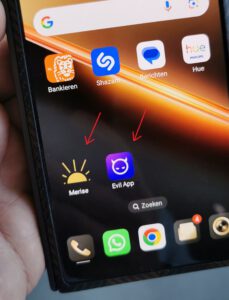
As long as you believe the evil app is useful (as a pleasant experience), you might keep opening it. If you discovered that its costs outweighed its benefits, you might reconsider. Yet if the damage was gradual, difficult to recognize, or hidden behind an appealing experience, you could continue using it for a long time. Its popularity might provide reassurance: your friends use it, too. Surely it cannot be that bad?
This is where the app becomes a metaphor for the Alcohol Matrix, as it describes a system being played outside ourselves. The app has no power on us, like any other app. It is only when we start to believe it will serve that we start to engage with it. And what we experiences during each session also influences our belief & willingness to return to it. Marketing, familiarity, and social approval can make those expectations feel more reliable than they are. Isolating the app as a system explains why alcohol on itself has no power (if the app wouldn’t exist, we wouldn’t even try to negotiate with- our phone would also remain healthy).
The App Store and the App Maker
Within this analogy, the alcohol industry is the app maker, and the government occupies a role similar to the app store: regulating access while allowing the product to remain available.
The comparison is not exact. Governments have different policies, responsibilities, and revenue structures, and availability does not prove a coordinated intention to cause harm. Still, the analogy raises a useful question: does permission to sell something mean it is designed to serve your well-being?
A product can be legal, familiar, and economically important without being harmless. Its continued availability is not a personal recommendation to use it.
Nor does popularity settle the question. A widely used app can still have features that deserve scrutiny. The same applies to alcohol: what matters is not only how many people participate, but what participation means for our own lifes.
“Use the App in Moderation”
Now imagine that the app carries a warning: “Enjoy in moderation.”
The warning acknowledges that use can have consequences, but it may leave important questions unanswered. What should you watch for? How might repeated use affect you? What if you are already struggling to limit your use?
When something goes wrong, the explanation may focus entirely on the user: “You used it irresponsibly.” Personal choices matter, but an explanation that ignores the product’s addictive properties and the way it is marketed is incomplete.
The issue is not that every warning is dishonest or that every user will develop dependence. It is that a brief instruction to moderate cannot explain the full relationship between a substance, a person, and the culture surrounding them.
When One App Affects the Others
Imagine a phone filled with useful apps: banking, email, meetings, dating, travel, and health. Each supports a different part of your life.
Alongside them is an entertainment app that makes everything feel more enjoyable for a while. Over time, however, you begin noticing problems elsewhere. Your calendar becomes harder to manage. Your messages receive less attention. Your relationships feel less satisfying. You have less energy for the activities that once mattered to you.
In this thought experiment, the other apps represent different parts of life: work, relationships, health, and everyday responsibilities. Their declining performance represents possible consequences- not a fixed percentage of damage or a prediction about every drinker.
The difficulty is that the entertainment app may still feel reliable. When the rest of the phone becomes frustrating, it offers an escape. You return to the very experience that may be contributing to the problems you want relief from.
The bubble becomes attractive not only because it feels good, but because life outside it has become harder.
Taking a Break
Eventually, you investigate the pattern and decide to stop opening the app for a while. As time passes, some of the other functions begin to improve.
You feel encouraged. Perhaps your sleep is better, your attention steadier, or your relationships easier to engage with. Then a familiar thought appears: “Everything is working again. Surely I can go back to the game now.”
You reopen the app. At first, it seems manageable. But the old pattern may return, and the difficulties you hoped to leave behind may reappear.
This is an illustration of how a familiar habit can re-establish itself, not a claim that everyone experiences the same relapse pattern or recovers completely after a fixed period. Real experiences vary, and stopping alcohol can require medical guidance where physical dependence is present.
The question is nevertheless important: if a break improves your life, what does that tell you about the role the app has been playing?
Then Fear Kicks In
“Does this mean I should never use it again? This was my favourite app. I have put so much into it- my memories, my friendships, even part of my identity. How can something that felt so helpful also be a source of problems?”
That conflict can be difficult to accept. You are not merely reconsidering a habit. You may be questioning a belief you have relied on for years.
It can feel easier to search for a way to preserve the relationship: use the app less, open it only on certain days, or create rules that promise a different outcome.
For some people, reducing alcohol use can reduce harm. For others, attempts at moderation repeatedly lead back to a pattern they no longer want. The metaphor should not decide that question in advance, but it can help you examine your own experience honestly.
Are the rules you set around this app improve your life, or mainly reassuring you that you can keep returning to the bubble? Are you changing the pattern, or finding new explanations for it? The aim is not to prove that you can use the app. It is to decide whether using it serves the life you want to build.
If you are not sure whether the rules work for you, consider this: Would you really believe that creating your own personal formula could bypass the app system-formula? Or is the app code already fixed and simply designed to provide a sophisticated illusion that pretends to “serve you in reality” while selling you poison? Does the system really provide a better life long term, or is it simply a hard drug that creates its own demand by distorting reality? You can believe whatever you want, but what you believe is exactly what they control (the alcohol industry).
It makes no sense to negotiate with a scam.

We don’t need to argue about the bubble benefits
Here are 10 artifacts/delayed consequences most experts agree on (happening to your reality, not in the bubbles).
Alcohol alters your brain cells
Contrary to popular belief, alcohol doesn’t kill your brain cells, but it alters neurotransmitter levels: the chemical messengers that control your mood, perception, and behavior. We’re excited when we drink because it depresses our controlling behaviors like judgment, self-monitoring, planning and reasoning. This explains why a drunken idea doesn’t usually seem great the morning after. Alcohol increases the inhibitory neurotransmitter, GABA, which normally reduces energy levels. This slows your thought, speech, and movements as you drink more. Alcohol also impairs the cerebellum—the control site for your balance and coordination. So you become more clumsy and fall over. Alcohol affects your cerebral cortex, which is responsible for thinking, memory, and learning. But here’s the twist: alcohol jacks up dopamine levels in your brain’s reward center. You experience the same pleasure as hanging out with friends, going on vacation, getting a big bonus at work, and taking drugs (like cocaine and crystal meth). This tricks you into thinking that alcohol makes you feel great. So you keep drinking to get more dopamine release. Over time, with more drinking, the dopamine effect diminishes until it’s almost non-existent. That’s why many excessive drinkers say drinking eventually stopped working. They no longer got the euphoria from drinking. That’s why drinking is addictive. You’re chasing euphoria. And when you quit drinking, it takes the brain some time to begin naturally producing dopamine again. Research suggests that alcohol’s effect on dopamine is more significant for men than women, which may account for men drinking more than women on average.
Alcohol reduces your libido
Alcohol depresses nerve centers in the hypothalamus that control sexual arousal and performance. So although you might get hornier after a few drinks, sexual performance decreases. Almost three-quarters of men with alcohol dependence have at least one sexual health issue, such as low desire, erectile dysfunction, or premature ejaculation, according to many studies.
Alcohol dehydrates your skin
Alcohol dehydrates your skin—your body’s largest organ. This happens every time you drink, depriving the skin of vital vitamins and nutrients. The lost fluid can lead to flakiness and puffiness around the eyes. It dilates your blood vessels, giving you bloodshot eyes. Plus, the excess sugars you’re consuming (especially with beer and wine), damage the DNA and collagen in the skin which can lead to more rapid aging. Alcohol can make people stressed and anxious, and this stress produces the androgen hormones that stimulate acne. Bottom line: Drinking makes you look weathered. (Look at that photo of me and Jennifer Aniston again.)
Alcohol weakens your heart
People who regularly binge drink—which is drinking double the daily limit of three to four units for a man and two to three units for a woman or more in one session – dramatically increase their risk of stroke. Excessive alcohol damages the heart’s ability to pump which increases the risk of heart failure. Two drinks per day can raise your risk of atrial fibrillation by 17 percent, according to a study in the Journal of the American College of Cardiology. This type of irregular heartbeat approximately quadruples your risk of having a stroke and triples your risk of heart failure.
Alcohol weakens your muscles
Hit the gym as hard as you want but you’ll never get bigger muscles if you hit the bar afterward. Alcohol tinkers with your hormonal and inflammatory responses to exercise, making it more difficult for your body to repair damaged proteins and build new ones (essential steps in getting buff).
Alcohol damages your stomach
Just one night of bingeing increases your gut permeability, according to University of Massachusetts Medical School researchers. Harmful toxins and bacteria leak from your digestive system into your bloodstream, prompting an immune-system response that can eventually lead to liver disease and other health problems. At lower doses, alcohol irritates your stomach, increases acidity, and relaxes the muscle at the end of your esophagus, causing heartburn.
Alcohol damages your liver
Liver disease has risen in the UK by a staggering 400 percent since the 1970s. “Those at risk are not just chronic alcohol abusers, but also middle-aged, professionals who drink a little too much most nights,” says Dr. Debbie Shawcross at King’s College Hospital Liver Unit.
Alcohol increases your risk of death
Alcohol is a factor in around 50% of suicides, traffic accidents, sexual assaults, homicides, and drowning’s. According to The World Health Organization, every ten seconds someone dies because of alcohol misuse.
Alcohol increases women’s risk of breast cancer
Studies have found women who drink two to four drinks a day have a 41% to 69% higher risk of breast cancer. Women also have a 40% higher risk than men of developing high blood pressure from drinking too much.
Alcohol makes you fat
Alcohol contains a lot of empty calories. Zero nutritional value. A large glass of wine can have the same calories as a doughnut.
But it’s not just the alcohol. It’s the soda you drink with the alcohol. Think of all the empty calories you’re consuming from the Coca-Cola or sprite you have with your vodka. Alcohol causes a drop in your blood sugar, which makes you more likely to want to eat unhealthy sugary and carb-loaded foods. The body metabolizes alcohol before calories from protein, carbohydrate, and fat. This leads to excess fat being stored that your body would otherwise naturally prioritize burning.
Alcohol disrupts your sleep
You may fall unconscious, but you miss the vital first stage of REM sleep. Alcohol disrupts sleep homeostasis, which causes you to wake up in the middle of the night. When you drink alcohol close to bedtime, you can go straight into deep sleep, missing out on (REM) sleep. You’ll wake feeling exhausted after having only one or two of the normal six to seven cycles of REM sleep.
Alcohol damages your bank balance
Alcohol costs you a lot of money. Some 30-Day No Alcohol Challenge members report saving over $1,000 a month. That’s $12,000 a year or $36,000 over three years. Imagine what you could do with that amount of money?
Vision or Distraction?
The consequence MeRise highlights is the loss of vitality- and, perhaps more importantly, a clear vision of your future. A limiting belief system can keep you repeating a familiar pattern without asking where it is taking you.
Over time, the consequences may become clearer. Imagine driving an old, poorly maintained car- a metaphor for your energy and mental well-being- while expecting it to take you somewhere meaningful. Yet you have never decided where you want to go. Eventually, you may start asking the right questions: Do I know my destination? And do I have the clarity and energy to get there?
Both your vision and your relationship with alcohol can shape your future. Vision gives you direction; alcohol can become a distraction from it. The question is not whether you are a successful or worthy person, but whether your choices support the life you want to build.
What you believe can encourage growth- or keep you attached to familiar patterns that no longer serve you. Consider the contrast between these two ways of thinking:
Vision: “I choose clarity and direction.”
Before I can create and carry out a plan, I need to understand where I want to go. I am worthy. I am capable. I trust- and believe myself. I want to build a life that feels meaningful and fulfilling. My self-belief grows through reflection, experience, and a willingness to examine the evidences leading to my goals. I once believed the Matrix served me when needed, but I now recognize how alcohol became a habit pattern that has distracted me from my goals, by blurring my vision – stealing my time energy and focus. I choose to invest in what strengthens my life in reality.
Alcohol: “I choose immediate relief.”
I turn to a temporary change in how reality feels. I rely on a familiar system, reinforced by marketing and drinking culture, because I expect a comforting result. I tell myself that alcohol will quiet my anxiety, loneliness, boredom, or discomfort right now. But relief in the moment does not necessarily resolve what is causing those feelings- or move me towards the future I want.
Beliefs are powerful. Question what they promise, notice where they lead, and choose what supports the life you want to build.